
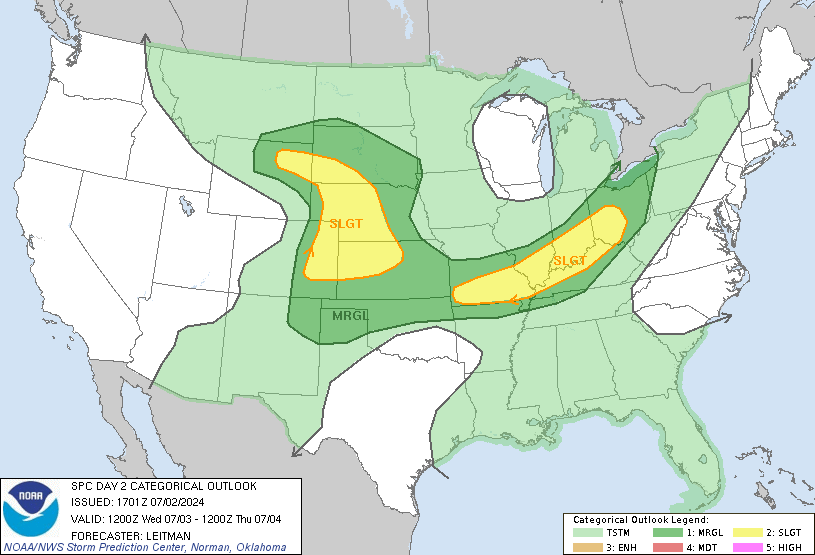
 Later this evening, many of us will likely experience the first thunderstorm of the season as a strong cold front pushes through, and some of those storms may be powerful. No doubt you will hear on the newscasts today that we are under a "slight risk for severe thunderstorms." But what does that really mean? First of all, that risk is a forecast issued by the Storm Prediction Center, a nerve-center, if you will, for national 24/7 severe weather forecasting -- brought to you by your tax dollars as a part of the National Weather Service. A slight risk is defined as anywhere between a 15-30% chance of severe hail or wind damage within a radius 25 miles of a point within the risk area. Why 25 miles? That's about the size of a major metropolitan area. Seem low? Well, even though severe storms tend to receive a large amount of media coverage, severe weather is uncommon at any one location. Officially defined (here I go again), a severe thunderstorm is defined as a thunderstorm containing hail at least an inch in diameter or larger and winds of 58 mph or greater.
Now the juicy forecast details. Tomorrow will be another unseasonably warm day, with temperatures getting well into the 80s once again. Some clouds filtering in throughout the day may keep us from getting close to 90° as seen on Wednesday, however with a slight up-tick in humidity, it'll be hard to notice the difference. The first threat of any organized shower or thunderstorm activity across Southeastern PA will come late in the afternoon, probably after 4pm. Right now I would handicap the best time for any thunderstorm activity, potentially strong, to be between 6pm and Midnight. The exact evolution of the current thunderstorm complex over the Ohio Valley, as well as some other minor details, will determine when and where gets the worst of it. I'll post updates on our Twitter account, twitter.com/theweatherword, about any impending hazards.
One good thing we may have on our side is the veil of night. Thunderstorm activity thrives with daytime heat, as this naturally leads to rising air and strong convection. With the loss of sunshine, thunderstorms will have to rely mainly on atmospheric dynamics, rather than rich daytime heat, to survive well into the night. That being said, since this cold front is looking to be very strong, thunderstorms will likely sustain themselves well after dusk. On the other side, high temperatures to close out the week on Friday will probably not break the 50s.
Keep an eye to the sky!
.


No comments:
Post a Comment